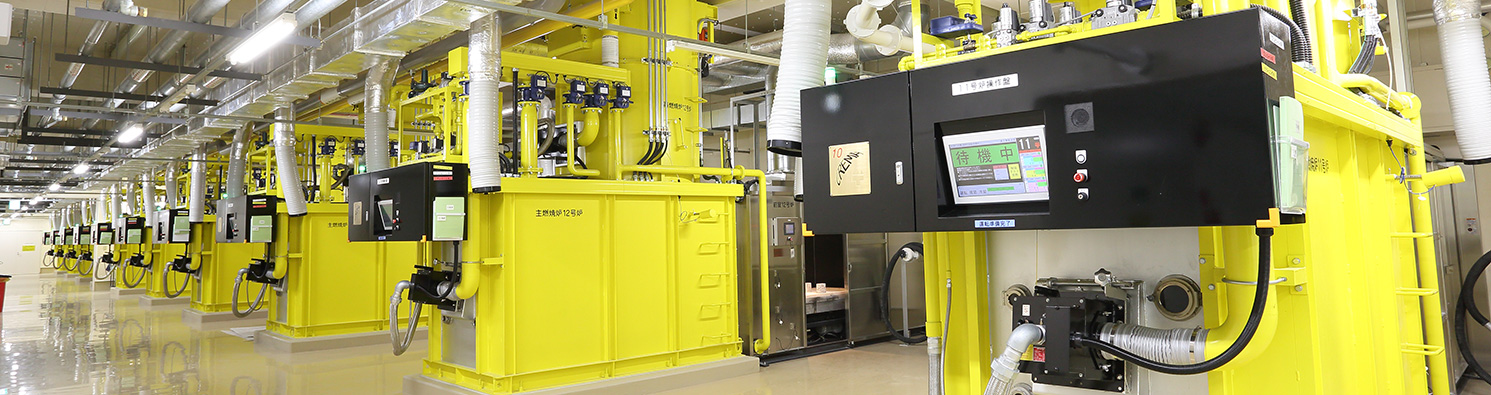
About Flue Gas Measurement
At Nagoya City Daini Crematorium, we regularly measure dioxins and other substances in the flue gas in accordance with the “Guidelines for Measures to Reduce Dioxins Emitted from Crematoria” (March 2000), and publish the results. In addition, from the viewpoint of protecting the surrounding environment, we have established our own pollution prevention guaranteed values.
Measurement Results (Japanese)
Detailed annual numerical tables (concentrations by furnace and measurement date) are currently available only on the Japanese page. Please refer to the links below for the latest results.
* The above links take you to the Japanese emission measurement page. Even if the anchor does not jump directly to each fiscal year, you can scroll to the corresponding table.
Measurement Targets and Methods
| Measurement target | Measurement method |
|---|---|
| Nitrogen oxides | JIS K 0104 (2011)-8 / Continuous analysis method – chemiluminescence method |
| Sulfur oxides | JIS K 0103 (2011)-8 / Continuous analysis method – infrared absorption method |
| Hydrogen chloride | JIS K 0107 (2012)-7.1 / Ion chromatograph method |
| Dust | JIS Z 8808 (2013)-10 / Circular filter paper method |
| Dioxins | JIS K 0311 (2008) |
Note 1) At Nagoya City Daini Crematorium, we have established our own flue gas control standards called “pollution prevention guaranteed values” to further protect the surrounding environment.
Note 2) For items marked with an asterisk (*), the results represent the
maximum values, and for other items, they represent
the average values.
The definitions of maximum and average values in the table are as follows:
・Maximum value: the maximum of the 5-minute average values from the start of cremation
・Average value: the average value from the start to the end of cremation
Note 3) Each item is shown as a converted value (standard oxygen concentration: O2 = 12%). If the measured value is below the quantitation limit, the converted value is calculated using the quantitation limit.
Note 4) The unit of volume represents the standard state (0 °C, 101.32 kPa).